The Flying Car(XPeng Voyager X2 ):The XPeng Voyager X2 is an innovative electric vertical takeoff and landing (eVTOL) aircraft developed by XPeng AeroHT, a subsidiary of the Chinese electric vehicle manufacturer XPeng Motors. The Voyager X2 is part of XPeng’s efforts to develop urban air mobility (UAM) solutions, which aim to revolutionize transportation by providing efficient air travel for short-distance commutes.
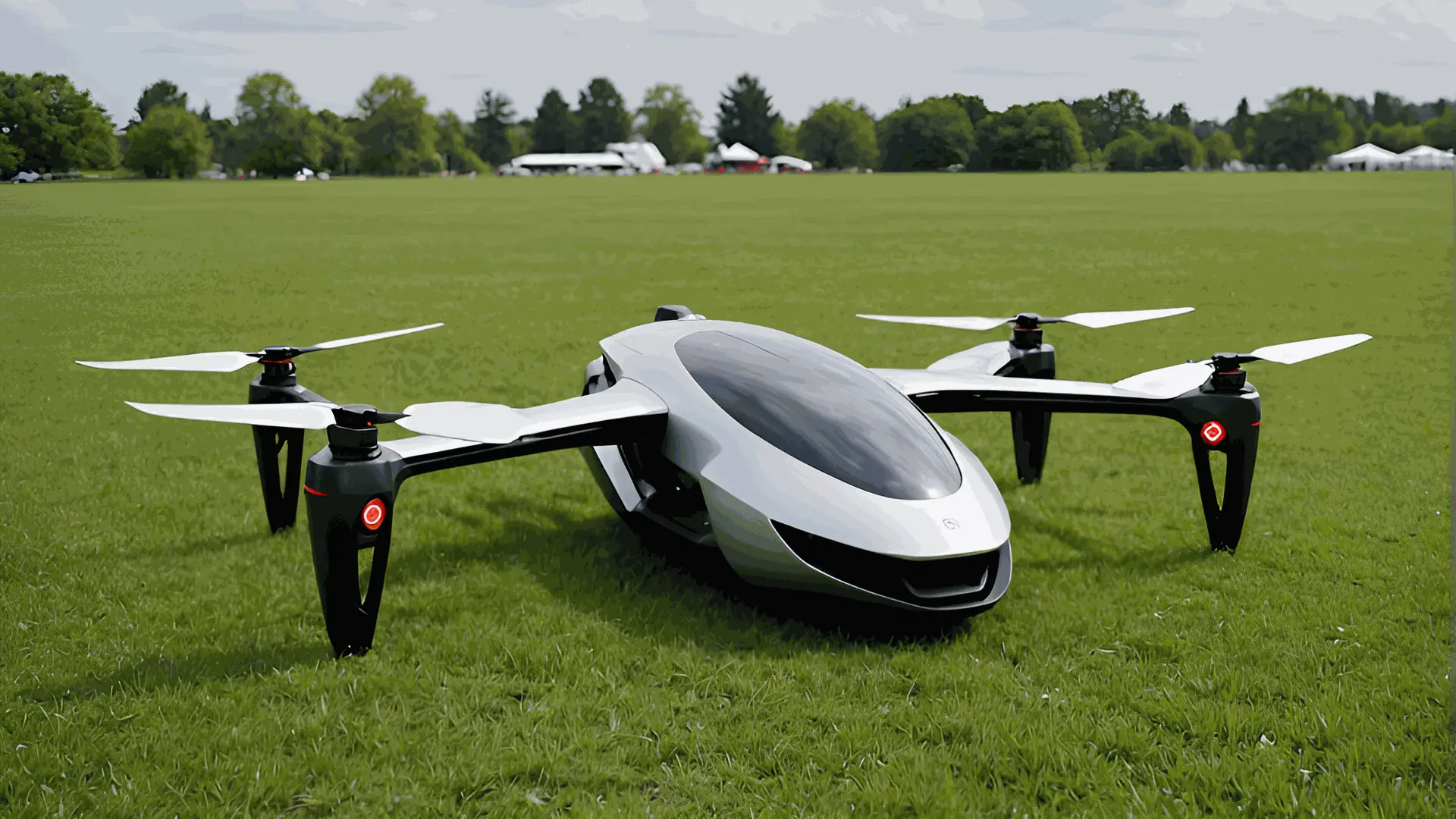
Key Features and Details of the XPeng Voyager X2:
1. Design & Build:
- Shape and Structure: The Voyager X2 has a futuristic and compact design, resembling a hybrid between a drone and a small aircraft. It features a sleek body with multiple rotors for vertical takeoff and landing, allowing it to operate in urban environments where space may be limited.
- Materials: The aircraft is constructed using lightweight composite materials to ensure both durability and efficiency in flight.
2. Dimensions:
- Length: Approximately 4.7 meters (15.4 feet).
- Width: 5.7 meters (18.7 feet).
- Height: About 1.6 meters (5.2 feet).
- Weight: The aircraft has a maximum takeoff weight of about 560 kilograms (1,235 pounds).
3. Performance:
- Power Source: The Voyager X2 is powered by an electric battery, typical of XPeng’s commitment to sustainable energy solutions. The aircraft features high-capacity batteries that allow it to operate in an eco-friendly manner.
- Speed: The top speed is approximately 130 km/h (81 mph).
- Range: The vehicle has a flight range of around 35 to 50 kilometers (22 to 31 miles), depending on flight conditions and battery charge.
- Flight Time: The Voyager X2 can fly for up to 35 minutes on a full charge.
4. Capacity:
- Passenger Capacity: The Voyager X2 is designed to carry up to two passengers, making it a potential vehicle for personal air transport or short urban commutes.
- Cockpit: The vehicle has a fully enclosed cockpit with seating for two passengers. It features a minimalist interior, with controls designed for ease of use during flight.
5. Technology and Autonomous Capabilities:
- Autonomous Flight: The XPeng Voyager X2 has been designed with autonomous flight capabilities. It is equipped with a range of sensors and advanced flight control systems, enabling it to fly autonomously or under the guidance of a human pilot.
- AI and Navigation: The aircraft employs artificial intelligence (AI) systems for navigation, obstacle avoidance, and flight management. The onboard AI also helps with stabilizing the flight, enhancing safety and reliability.
- Remote Control: While autonomous, the aircraft can also be remotely controlled for emergency situations or when manual piloting is necessary.
6. Flight Safety and Features:
- Safety Features: The XPeng Voyager X2 incorporates multiple safety features to ensure secure operations. This includes redundant power systems, automated emergency procedures, and advanced sensors that allow the aircraft to avoid collisions and navigate autonomously.
- Parachute System: In the event of a malfunction or emergency, the aircraft is equipped with an emergency parachute system, offering an additional layer of protection for passengers.
- Noise Reduction: The Voyager X2 is designed to minimize noise levels, a key consideration for urban air mobility to avoid disturbance in city environments.
7. Development & Testing:
- XPeng has been rigorously testing the Voyager X2 to refine its technology and ensure its readiness for commercialization.
- The vehicle has completed a series of successful test flights, showcasing its stability, safety, and performance.
- XPeng aims to address regulatory challenges and gain the necessary certifications to deploy eVTOL aircraft for public use, with future plans to integrate the Voyager X2 into urban air mobility networks in the coming years.
8. Market and Applications:
- The XPeng Voyager X2 is part of the larger trend of eVTOL aircraft being developed for urban air mobility. These vehicles are seen as a potential solution for reducing traffic congestion and providing faster, more efficient travel in densely populated cities.
- Use Cases: The Voyager X2 could be used for various applications, including:
- Passenger Transport: Offering short-distance flights within cities or between cities.
- Air Taxis: The aircraft could function as part of an air taxi service, allowing passengers to book flights via a mobile app.
- Cargo Transport: The vehicle’s design could also be adapted to carry cargo for urban logistics.
9. Regulatory Considerations:
- As an eVTOL aircraft, the Voyager X2 must meet stringent regulatory standards for airworthiness, noise emissions, and airspace management. XPeng is working closely with aviation authorities, such as the Civil Aviation Administration of China (CAAC), to gain approval for commercial operations.
- Certification and Integration: XPeng plans to conduct further tests and secure certifications from aviation regulators globally, with plans to gradually introduce the vehicle into commercial air mobility markets.
10. Future Prospects:
- Partnerships: XPeng AeroHT has been collaborating with several tech and aviation companies to develop its eVTOL technology and integrate it into larger urban air mobility systems.
- Expansion: As the technology advances, XPeng aims to scale production and bring the Voyager X2 to various markets worldwide. The focus is on reducing travel time, alleviating urban congestion, and providing a sustainable alternative to traditional modes of transport.
Conclusion:
The XPeng Voyager X2 represents a significant step forward in the development of urban air mobility technologies. With its sleek design, autonomous capabilities, and emphasis on safety and sustainability, the Voyager X2 holds promise for transforming the future of transportation. While still in the testing phase, XPeng’s vision is to make air taxis a viable and efficient solution for city commuting in the coming years.
The Flying Car(XPeng Voyager X2 )